
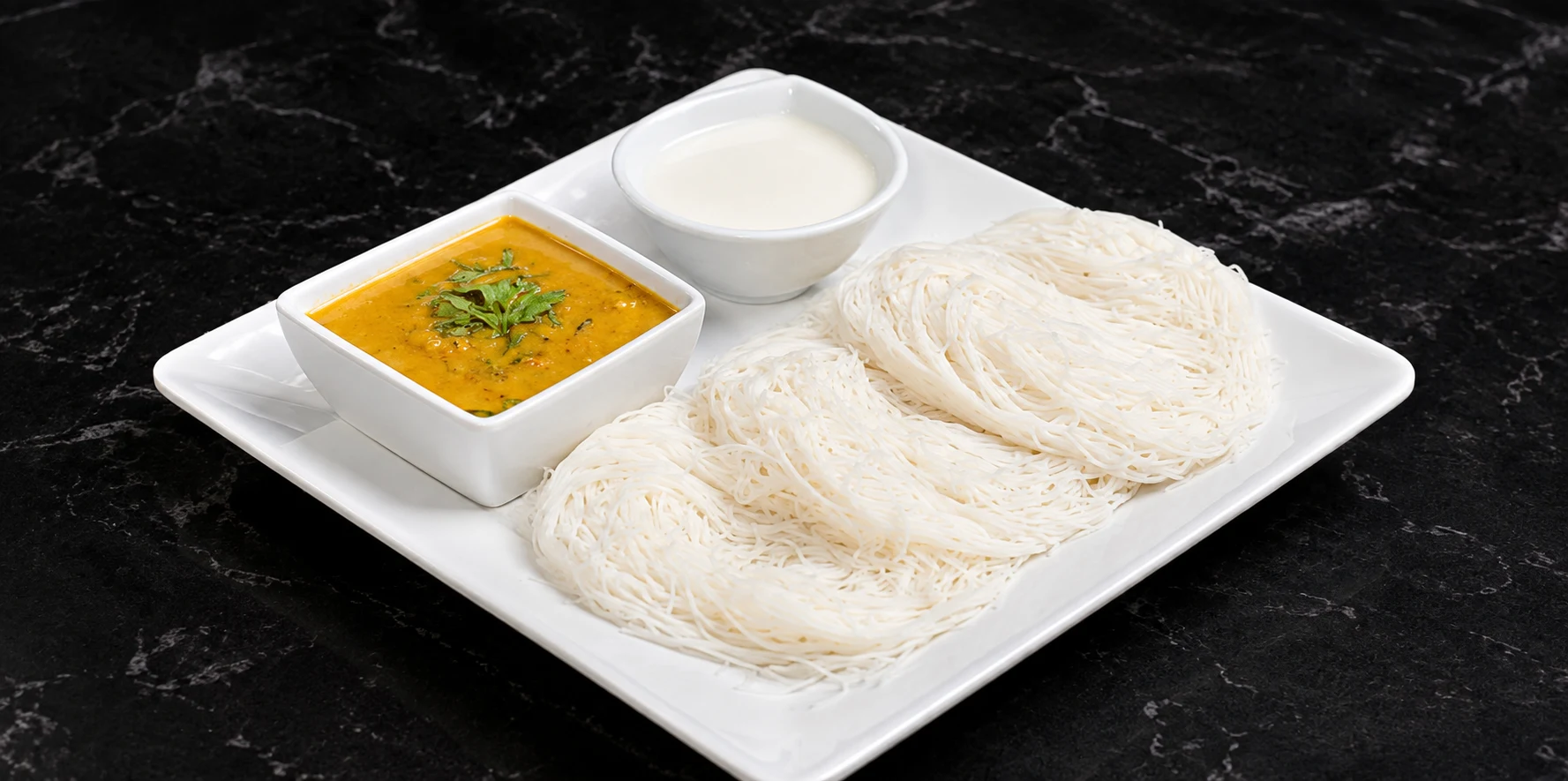
South Indian cuisine offers much more than dosa, idli, and rice meals. Some of its most interesting dishes are built around simple ingredients and traditional preparation techniques. Idiyappam in Massachusetts is worth exploring for anyone curious about regional Indian food, especially dishes that combine delicate textures with comforting accompaniments.
Known as string hoppers, idiyappam consists of fine strands of rice flour dough pressed into soft nests and steamed. The result is light, tender, and subtly flavored, making it an excellent match for coconut milk, vegetable kurma, and other flavorful accompaniments.
For diners discovering traditional South Indian cuisine for the first time, idiyappam offers a different experience from the crispness of dosa or the softness of idli. Understanding how it is prepared, where it comes from, and how it is traditionally served makes every bite more meaningful.
Table of Contents
- What Is Idiyappam and Where Does It Come From?
- What Makes Traditional Idiyappam Different?
- How Is Idiyappam Traditionally Served?
- Finding Idiyappam in Massachusetts
- Discovering Idiyappam at A2B Northborough
- What Should First-Time Diners Order with Idiyappam?
- Frequently Asked Questions About Idiyappam
- A Traditional Dish with a Place in Massachusetts Dining
What Is Idiyappam and Where Does It Come From?
Idiyappam is a traditional South Indian dish made from rice flour dough that is pressed into thin noodle-like strands and steamed. Also called string hoppers, it is associated with the food traditions of Tamil Nadu and Kerala, as well as Sri Lankan cuisine. Its delicate texture makes it suitable for both savory curries and sweet accompaniments.
Unlike conventional noodles, idiyappam is generally prepared by pressing rice flour dough through a specialized mould to create fine strands. These strands are arranged into small nests and steamed until cooked.
The technique produces a delicate texture without requiring deep-frying or heavy sauce. Since the rice flour has a mild flavor, the accompaniments play an important role in shaping the meal.
Idiyappam is traditionally enjoyed at breakfast in many households, although it can also be served for other meals. Its versatility comes from its ability to absorb surrounding flavors without losing its distinctive texture.
What Makes Traditional Idiyappam Different?
Three details distinguish idiyappam from other familiar South Indian dishes: its preparation method, its texture, and the way it is paired with accompaniments.
First, the rice flour dough is pressed into strands rather than spread across a hot griddle. Second, steaming cooks the strands gently, creating a soft, light structure. Third, the mild flavor makes idiyappam particularly compatible with coconut-based dishes and aromatic curries.
Idiyappam vs. Appam
Although their names sound similar, idiyappam and appam are prepared differently.
- Idiyappam: Rice flour is pressed into fine strands and steamed into small nests.
- Appam: Fermented batter is poured into a curved pan and cooked into a bowl-shaped pancake with delicate edges and a soft center.
Appam typically has a lightly fermented flavor, while idiyappam is milder and noodle-like. Both can be served with coconut milk or savory accompaniments, but their textures create different dining experiences.
Why Is Steaming Important?
Steaming allows the delicate rice strands to cook without becoming crisp or oily. The finished dish should feel tender and separate easily, rather than forming a dense or sticky mass.
The consistency of the dough matters, too. If it is too dry, the strands may break during pressing. If it is too wet, the finished nests may lose their structure. This balance is an important part of preparing traditional idiyappam successfully.
How Is Idiyappam Traditionally Served?
Idiyappam is commonly served with coconut milk, vegetable kurma, or other regional curries. Its mild rice flavor complements both gently sweet and savory accompaniments, allowing the strands to absorb sauce without becoming as heavy as some bread-based dishes.
Coconut milk is a popular pairing because its creamy texture complements the delicate rice strands. Depending on the regional tradition, it may be served plain, lightly sweetened, or accompanied by other ingredients.
Vegetable kurma provides a savory alternative. The vegetables, aromatic spices, and creamy gravy create a more substantial meal while allowing the idiyappam to remain in the central element.
Other accompaniments vary by household and region. Some preparations are served with coconut-based curries, while others may be paired with more strongly seasoned gravies.
The best way to enjoy idiyappam is to combine a small portion with the accompaniment first. This helps you appreciate the contrast between the soft rice strands and the sauce before adjusting the proportions to your taste.
Finding Idiyappam in Massachusetts
For people searching for authentic South Indian food in Massachusetts, idiyappam offers an opportunity to explore a regional specialty beyond the more widely recognized dosa and idli.
In Northborough, diners can explore this dish at A2B, a vegetarian Indian restaurant featuring South Indian specialties alongside other Indian dishes.
A2B’s published menu lists idiyappam served with vegetable kurma and coconut milk. It also lists idiyappam with mushroom paya as a weekend-only option. These accompaniments give diners a choice between a vegetable-based curry pairing and a distinct mushroom preparation.
For those searching for Idiyappam in Northborough, MA, checking the current menu before visiting is useful, especially when looking for a particular accompaniment or weekend special.
Discovering Idiyappam at A2B Northborough
A2B offers a way to explore idiyappam as part of a wider vegetarian South Indian menu.
The restaurant is located at:
A2B Indian Veg 10004 Shops Way Northborough, MA 01532
Its menu includes traditional South Indian dishes alongside other vegetarian Indian specialties. For someone new to idiyappam, this provides an opportunity to compare its delicate texture with familiar dishes such as idli, dosa, and pongal.
The combination of idiyappam, vegetable kurma, and coconut milk is a useful starting point for diners who prefer a mild, comforting meal. Those interested in a different flavor profile can check whether the weekend mushroom paya preparation is available.
Because menu selections and service times can change, confirm current availability and restaurant hours before planning your visit.
What Should First-Time Diners Order with Idiyappam?
First-time diners should try idiyappam with coconut milk or vegetable kurma to understand how its mild rice flavor works with different accompaniments. Coconut milk highlights its delicate texture, while vegetable kurma adds savory spices and a creamy consistency. Trying both, when available, offers a useful introduction to the dish.
Here are a few practical suggestions:
- For a mild meal: Begin with idiyappam and coconut milk.
- For a savory option: Pair it with vegetable kurma.
- For a different weekend preparation: Ask about idiyappam with mushroom paya.
- For a shared meal: Combine idiyappam with another South Indian specialty so you can compare steamed rice strands with a griddle-cooked or lentil-based dish.
Idiyappam can be particularly appealing to diners who enjoy subtle flavors and soft textures. If you usually prefer crispy dosa, it offers a contrasting experience that highlights a different side of South Indian cooking.
Frequently Asked Questions About Idiyappam
What is idiyappam made of?
Idiyappam is primarily made from rice flour, water, and sometimes salt. The dough is pressed through a special mould to create thin strands, arranged into nests, and steamed. Its ingredient list is simple, so the flavor of the finished dish depends largely on its texture, and the accompaniments served alongside it.
Is idiyappam a vegetarian dish?
Traditional idiyappam made with rice flour and water is vegetarian and can be vegan, depending on the ingredients used. However, accompaniments may contain dairy or other ingredients. If you have specific dietary requirements, check the preparation and ingredients of both the idiyappam and its accompanying curry.
What is the difference between idiyappam and rice noodles?
Both feature rice-based strands, but they differ in preparation and customary serving style. Idiyappam is formed from rice flour dough using a press and then steamed into nests. Many other rice noodles are extruded or formed differently and may be boiled or stir-fried. Idiyappam is traditionally served with curry or coconut milk.
Where can I find idiyappam in Massachusetts?
A2B in Northborough, Massachusetts, lists idiyappam with vegetable kurma and coconut milk on its menu. A weekend-only mushroom paya variation is also listed. Check the restaurant’s official menu before visiting to confirm current availability and serving details.
A Traditional Dish with a Place in Massachusetts Dining
Idiyappam demonstrates how a few basic ingredients can create a dish with a distinctive texture and a strong connection to regional food traditions. It’s fine rice strands, gentle flavor, and compatibility with coconut milk and curries make it a worthwhile discovery for longtime South Indian food lovers and curious first-time diners alike.
For those exploring South Indian food in Massachusetts, A2B Northborough offers an opportunity to experience this traditional preparation alongside other vegetarian specialties. Understanding the difference between idiyappam, appam, and dosa can make the experience even more rewarding and introduce diners to a broader world of South Indian cuisine.