
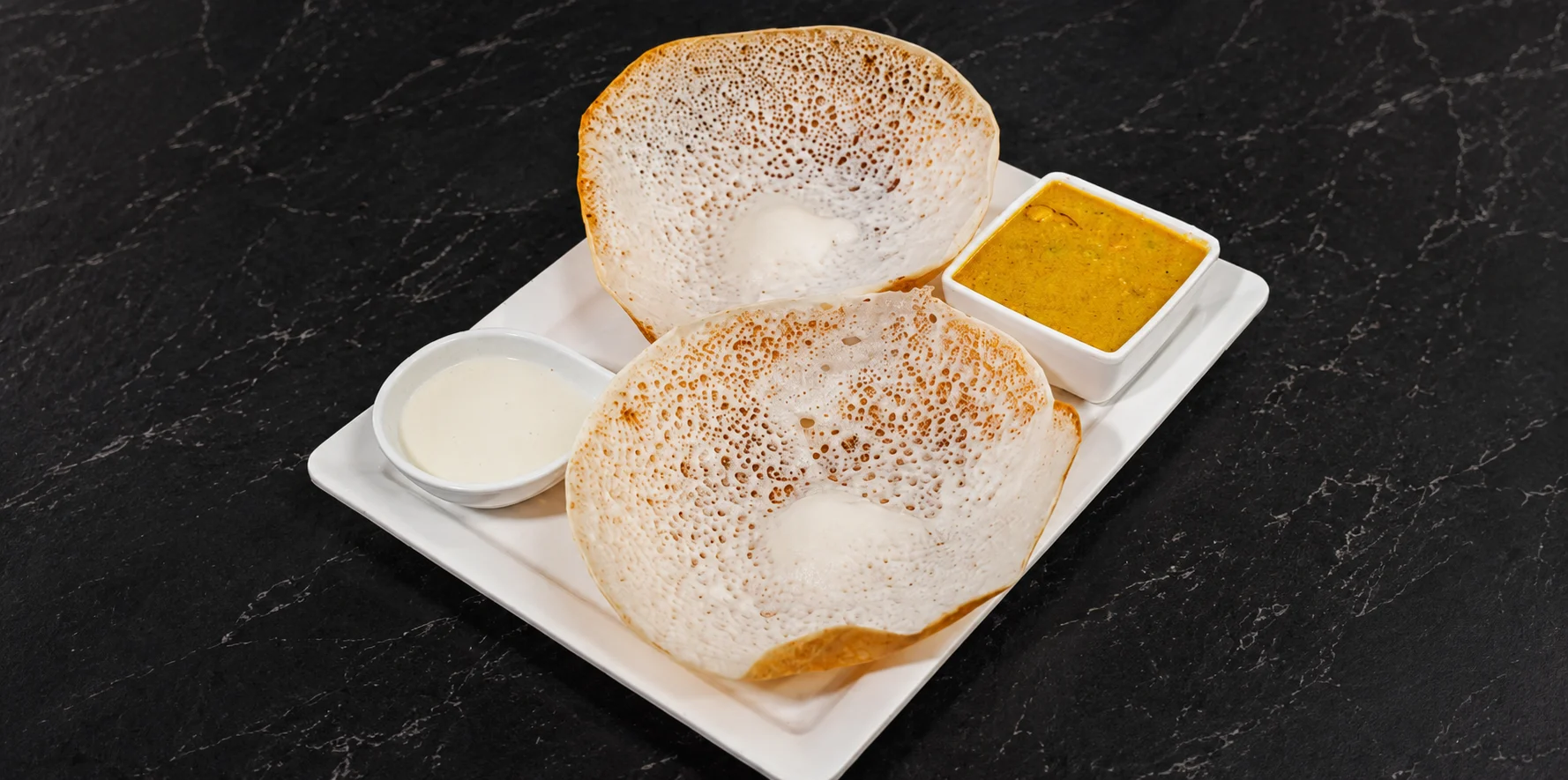
Many diners discover South Indian food through dosa or idli, yet appam offers a different expression of rice-based cooking. Anyone searching for Appam in Massachusetts is usually looking for its signature contrast: a lacy rim surrounding a soft, spongy center.
Table of Contents
- What Are Diners Looking for When They Search for Appam in Massachusetts?
- What Makes Appam Different from Dosa?
- How Does Fermentation Shape an Appam?
- Why Does the Cooking Pan Matter?
- What Should First-Time Diners Order with Appam?
- How A2B Connects Appam with Massachusetts Dining
- When Does Appam Work Best for Local Diners?
- Frequently Asked Questions
- A Breakfast Tradition Worth Understanding
What Are Diners Looking for When They Search for Appam in Massachusetts?
People searching for the best appam in Massachusetts generally want a freshly cooked regional dish rather than a generic pancake. They may be checking whether the batter contains rice and coconut milk, whether it comes with an appropriate curry, and whether a pure vegetarian Indian restaurant suits a family group.
Freshness matters because appam is best soon after leaving the pan. The edges should be lightly crisp, while the center remains warm, airy, and tender enough to absorb gravy. A uniformly chewy appam misses the contrast that defines the dish.
What Makes Appam Different from Dosa?
Appam is a bowl-shaped fermented rice pancake with a soft, spongy center and thin, lacy edges. Dosa is normally spread flat across a griddle and may be crisp or flexible. Appam batter commonly includes coconut or coconut milk, giving it a gentler sweetness and softer interior than most dosa varieties.
The crisp rim is ideal for dipping, while the thicker center absorbs vegetable stew, kurma, coconut milk, or gravy. Appam is associated especially with Kerala and parts of Tamil Nadu and is related to Sri Lankan hoppers.
How Does Fermentation Shape an Appam?
Fermentation creates much of appam’s lightness and mild tang. As microorganisms act on carbohydrates in the batter, they produce gases and flavor compounds. Research on appam batter has observed increasing microbial activity and decreasing pH during fermentation.
A balanced appam should not taste aggressively sour. It carries a subtle fermented aroma, gentle sweetness from rice and coconut, and enough aeration to form tiny holes in the center. Time is therefore an essential ingredient.
This fermentation process also explains why appam differs from unfermented rice breads. The resting period gives the batter both its flavor and its ability to develop a light, porous middle when exposed to heat.
Why Does the Cooking Pan Matter?
Appam is traditionally cooked in a curved pan called an appachatti. Batter is poured into the center, and the pan is rotated, sending a thin layer up the sides while leaving more at the bottom. That motion creates a fine perimeter and pillowy middle.
Unlike dosa, appam is generally cooked on one side with the pan covered. Steam sets the center without drying it. The cook must control batter thickness, heat, and swirling speed; otherwise, the rim becomes thick, or the middle remains undercooked.
The finished appam should look almost bowl-shaped, with a pale, porous center surrounded by an irregular golden lace. That appearance is not decorative alone; it indicates that the batter, pan temperature, and swirling technique were properly balanced.
What Should First-Time Diners Order with Appam?
First-time diners should pair appam with coconut-based vegetable kurma, then try coconut milk for a milder contrast. The curry provides spices, vegetables, and body, while appam absorbs the gravy without feeling heavy. Two appams may suit a light meal; larger appetites may need an extra side.
Mushroom paya offers an earthier option, with mushrooms providing a meatier texture in spiced gravy. Madras filter coffee can finish the meal with dark-roasted aroma and frothy milk. Diners seeking variety might share idli, medhu vadai, or ghee pongal.
Tear a piece containing both rim and center. Dip rather than fully soak the first bites so the crisp-soft contrast remains noticeable. The thicker middle can then be used for richer spoonfuls of kurma or paya.
How A2B Connects Appam with Massachusetts Dining
A2B’s Northborough menu places appam within a broad vegetarian South Indian selection. Its Appam is made with fermented rice batter and coconut milk and served with vegetable kurma and coconut milk. The menu also lists Appam with Mushroom Paya as a weekend-only preparation.
A menu containing idiyappam, pongal, dosa, vadai, South Indian thali, and filter coffee helps diners understand differences among steamed, fermented, griddled, and rice-based dishes. This makes A2B relevant to people comparing a South Indian restaurant in Massachusetts with a general Indian restaurant.
A2B is located at 10004 Shops Way in Northborough and currently operates Tuesday through Sunday with separate lunch and dinner periods. Diners planning around a weekend specialty should confirm availability.
The restaurant’s wider menu also gives first-time visitors an opportunity to compare Kerala appam with Tamil and other South Indian dishes during the same meal. That context can be valuable for diners interested in traditional South Indian cuisine rather than one familiar item alone.
When Does Appam Work Best for Local Diners?
Appam works for a weekend breakfast-style meal, a light office lunch, or a relaxed family dinner. It is useful for vegetarian groups because each diner can adjust to richness and spice through the curry and coconut milk.
For takeout, travel time matters. Steam inside packaging can soften the lacy edges, so fresh appam is most rewarding when eaten promptly. Families can share it alongside dosa, idli, curries, and rice. At community gatherings, freshly timed service preserves its texture better than early batch preparation.
Appam is also approachable for diners who do not prefer intense heat. The pancake itself is mild, and spice can be controlled through the choice and quantity of accompaniment.
Frequently Asked Questions
Is appam sweet or savory?
Appam is mildly sweet and gently tangy rather than strongly seasoned. Rice and coconut create subtle sweetness, while fermentation adds light acidity. Coconut milk makes the pairing softer and sweeter; vegetable kurma or mushroom paya turns it into a savory meal with more spice, body, and aromatic depth in each bite.
Is appam the same as idiyappam?
No. Appam is a fermented batter pancake cooked in a curved pan, producing lacy edges and a spongy center. Idiyappam is made by pressing rice-flour dough into thin strands and steaming them in nests. Both work with coconut milk or curry, but their preparation methods, appearance, and textures differ considerably.
Is appam suitable for vegan diners?
The basic combination of rice, coconut, water, fermentation, and salt can be vegan. Restaurant recipes and accompaniments vary, and some curries may contain ghee, cream, or yogurt. Vegan diners should confirm the batter, cooking fat, vegetable kurma, mushroom paya, and coconut-milk preparation before ordering to avoid hidden dairy ingredients.
How many appams make a full meal?
For many diners, two appams with vegetable curry form a light-to-moderate meal. Someone with a larger appetite may prefer three or add vadai, idli, pongal, or another side. Portion needs vary for each diner, and the richness and quantity of the accompaniment largely determine how filling the complete meal feels.
A Breakfast Tradition Worth Understanding
Appam suits diners who enjoy gentle fermentation, coconut-based flavors, and contrasting textures. Its meaning lies in the technique: a simple rice batter becomes lacy, airy, and receptive to curry through careful fermentation and pan movement.
Within Massachusetts’s vegetarian dining landscape, A2B offers a practical way to experience this Kerala-associated favorite alongside other regional preparations. For families, vegetarian diners, and anyone exploring an authentic South Indian breakfast in Massachusetts, appam provides an informative entry point into the diversity of traditional South Indian cuisine.