
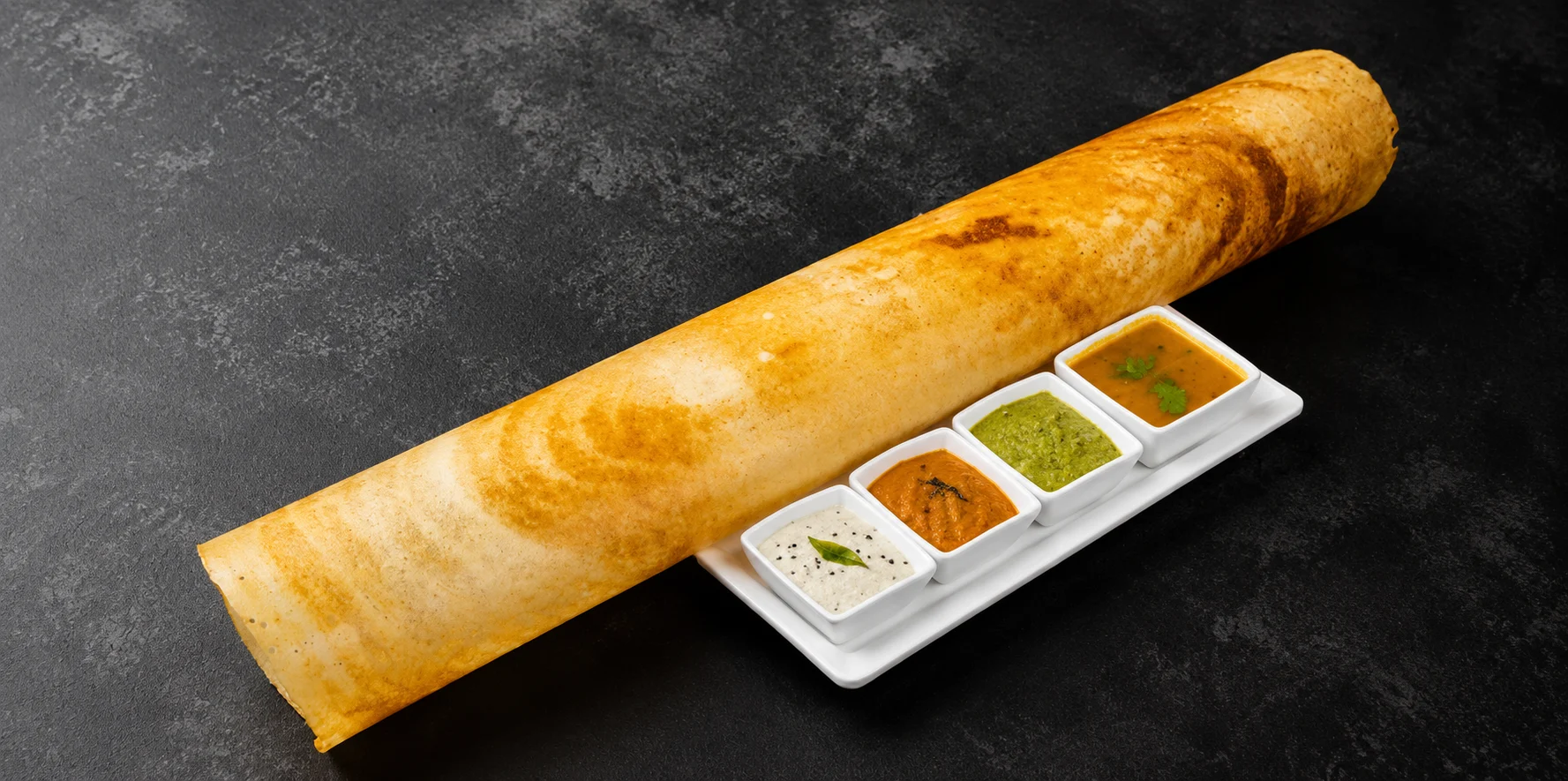
Finding an authentic Paper Roast in Massachusetts is not simply about locating a large dosa. Diners are usually searching for a precise contrast: a wafer-thin surface, golden color, fermented tang, and enough structure to remain crisp when broken and dipped. That result depends on batter preparation, griddle temperature, spreading technique, and immediate service. Knowing these details helps distinguish a true paper roast from an ordinary thin dosa and makes ordering easier.
Table of Contents
- What Are Diners Seeking in a Paper Roast?
- What Makes Paper Roast Different from Regular Dosa?
- How Does Fermentation Create Flavor and Texture?
- Why Do Sambar and Chutneys Matter?
- What Should First-Time Diners Order?
- Where Does A2B Fit into the Massachusetts Dosa Scene?
- Is Paper Roast Suitable for Different Occasions?
- Frequently Asked Questions
- A Crisp Window into South Indian Food Culture
What Are Diners Seeking in a Paper Roast in Massachusetts
People searching for a Paper Roast in Massachusetts usually want an authentic South Indian dosa that is exceptionally thin, evenly crisp, freshly cooked, and served with traditional accompaniments. They may also be comparing vegetarian restaurants, checking whether the batter is fermented, and deciding whether the dish suits breakfast, lunch, dinner, or family dining.
A well-made paper roast should be brittle at the edges, lightly chewy near thicker folds, and aromatic from the hot griddle. Diners are often seeking a restaurant that understands South Indian tiffin culture rather than treating dosa as a generic crepe.
What Makes Paper Roast Different from Regular Dosa
A paper roast is a longer, thinner, and crisper form of classic dosa. The batter is spread in a fine layer across a broad hot surface, producing a lace-like sheet with pronounced browning and a dry, crackling finish. Unlike masala dosa, it is valued mainly for texture rather than a substantial filling.
A plain dosa may remain flexible. A paper dosa is spread farther and cooked until more moisture escapes. Ghee roast may appear similar, but its defining feature is the aroma of ghee. Rava dosa differs because semolina-based batter creates an irregular, perforated surface.
How Does Fermentation Create Flavor and Texture
Traditional dosa batter combines rice and black gram, then rests while naturally occurring bacteria and yeasts ferment it. Research confirms that both participants participate, with bacteria playing the dominant role. Fermentation develops mild acidity, aroma, and the batter behavior needed for spreading and browning.
Crispness also depends on technique. The cook must balance batter consistency, pan heat, and spreading speed. A cool pan produces a pale, soft dosa; excessive heat can set the batter before it spreads thinly. Paper roast therefore showcases skill as much as ingredients.
Why Do Sambar and Chutneys Matter
Sambar contributes lentil body, tamarind acidity, vegetables, and warming spices. Coconut chutney adds coolness and creaminess, while tomato or chilli chutneys provide sharper contrast. Each dip changes the character of the same crisp piece.
Break small sections from the outside, dip briefly, and eat immediately. Pouring sambar over the entire dosa may soften it before its defining crackle can be enjoyed.
What Should First-Time Diners Order with Paper Roast
Order the paper roast with standard sambar and chutneys before adding fillings. This gives the clearest impression of the batter and cooking quality. Add medhu vadai for a crisp-outside, airy-inside contrast, or idli for a softer steamed counterpart.
For a fuller Indian breakfast, ghee pongal adds creamy rice-and-lentil comfort, while Madras filter coffee gives a roasted, frothy finish. A2B’s Massachusetts menu lists Paper Roast, medhu vadai, idly, ghee pongal, chutney-and-sambar combinations, and Madras filter coffee.
Where Does A2B Fit into the Massachusetts Dosa Scene
A2B in Northborough places paper roast within a broad pure vegetarian South Indian menu. Its menu describes Paper Roast as a crispy, thin crepe made from rice and lentils. The same section includes plain, onion, podi, masala, Mysore masala, paneer masala, cheese, and rava variations, allowing diners to compare styles.
That variety helps people seeking an authentic South Indian dosa in Massachusetts or comparing the best vegetarian Indian restaurant options. A pure vegetarian Indian restaurant can also simplify group dining for guests who avoid meat. A2B is located at 10004 Shops Way in Northborough, making it relevant for family meals, weekend dining, and group gatherings in Central Massachusetts.
Is Paper Roast Suitable for Different Dining Occasions
Paper roast is best eaten immediately, making it especially suitable for dine-in meals. Its dramatic length can make family dining engaging, although sharing requires quick eating to preserve crispness. For office lunches or takeout, a standard dosa or mini tiffin may travel more reliably.
Vegetarian groups can pair it with idli, vadai, pongal, or thali for variety. At celebrations or community gatherings, it can serve as a lighter opening before curries, rice dishes, sweets, and coffee.
Frequently Asked Questions
Is paper roast the same as paper dosa?
Yes. “Paper roast” and “paper dosa” generally describe the same style: an exceptionally thin, crisp dosa cooked until golden and dry enough to crack when broken. Naming varies by restaurant, but diners should expect a larger and more brittle preparation than regular plain dosa. Some kitchens use ghee or oil differently, so ask when that distinction matters.
Is paper roast spicy?
The dosa itself is usually mildly tangy rather than spicy because its main flavor comes from fermented rice-and-black-gram batter and griddle browning. Heat usually comes from chilli chutney, podi, spicy sambar, or a Mysore-style spread. Diners who prefer mild food can emphasize coconut chutney and request gentler accompaniments when ordering.
Is paper roast suitable for vegetarian diners?
Yes. Traditional paper roast is vegetarian, with batter typically made from rice, black gram, water, and salt, plus oil or ghee for cooking. Vegan diners should confirm whether ghee is used. At a pure vegetarian restaurant, meat is not prepared, although dairy may still appear in dishes, beverages, and sweets.
What is the best way to eat a paper roast?
Start at the crisp outer edge and break off manageable pieces by hand. Dip each piece lightly into chutney or sambar rather than soaking the entire dosa. Continue toward the center while it remains hot. This preserves the contrast between brittle edges, slightly softer folds, cooling chutney, and warm lentil stew.
A Crisp Window into South Indian Food Culture
Paper roast suits diners who appreciate texture, fermentation, vegetarian cooking, and food meant to be eaten fresh. Its significance lies in how rice, lentils, time, heat, and skilled spreading create something delicate yet dramatic. Within Massachusetts’s Indian dining landscape, A2B offers a practical setting for experiencing this classic alongside idli, vadai, pongal, thali, and filter coffee.